Mental Illness
Refer to therapy for therapies to mental illnesses.
Diagnosis
- Defining abnormal, how ==maladaptive== it is. It’s about being odd in a way that’s causing real problems.
- Classifying Disorders
- First step towards treatment
- Relives people from their responsibility for their problems
- Can falsely suggest cluster of symptoms
- Can result in stereotypes
- Can suggest understanding that’s not really there
- DSM-5-TR = The Diagnostic
and Statistics Manual of Mental Disorders
- Axis 1: Major Clinical Syndromes
- Axis 2: Personality Disorders
- Axis 3: Physical Disorders
- Axis 4: Severity of Recent Stress
- Axis 5: Global Assessment of Functionality
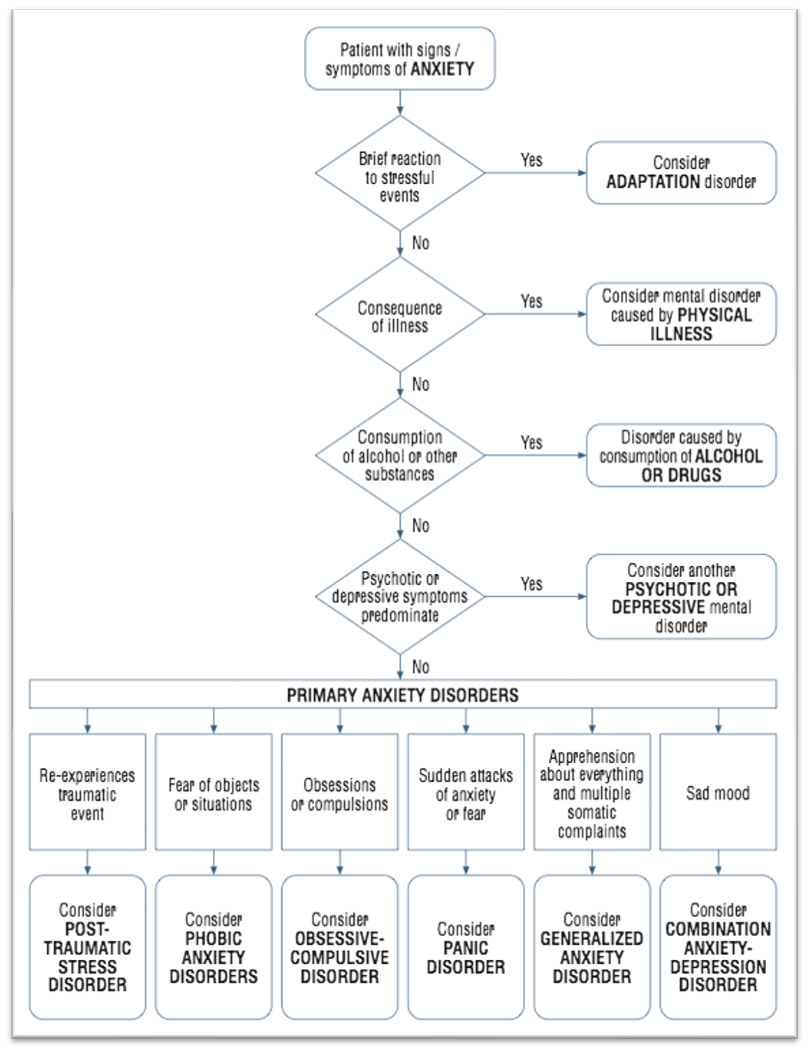
- Classification of Continuum.
Anxiety Disorders
- Panic Attacks
- 1.6%, women twice likely
- Periods of acute terror lasting from minutes to hours. Can’t see any danger, but feel the danger.
- Cause: Amygdala becomes active for no reason.
- Phobic Disorders
- e.g. agoraphobia, which can be more complex
- acrophobia, xenophobia, mysophobia, claustrophobia, hydrophobia
- Cause: similar to panic attacks, certain association
- Obsessive Compulsive Disorder
- Obsessive thoughts and compulsive behaviors.
- e.g. Obsessive doubt or uncertainty, obsessive fear of doing something prohibited…
- Dissociative Disorders
- Anxiety is reduced via a sudden disruption in consciousness, which may cause changes in memory or identity.
- Dissociative Amnesia
- Dissociative Fugue - abrupt identity shift
- Dissociative Identity Disorder - additional personality created to help deal the stress (Psycho?)
Disorders of Emotion
- Major Depressive Disorder
- A sad and apathetic mood
- Feelings of worthlessness and helpless
- A desire to withdraw from other people
- Sleepless; lost of appetite and sexual desire
- Either lethargy or agitation
- Incidence rate - Female more than male
- Bipolar Disorders
- Bipolar I Disorder - Episodes of mania, “nonstop orgasm”, usually mixed with periods of major depression
- Bipolar II Disorder - Periods of major depression mixed with occasion less intense periods of mania (hypomanic episodes)
- Cognitive Causes
- Negative thoughts, “Self-fulfilling prophecies”. Ekman experiment, what you think and do will control your emotional state (to some extent)
- Overblow small negatives into very large ones
- Blame on stable personal inadequacies
- Exacerbated by negative life events.
- Biological Causes - genetic, biochemical, sleep cycles
- Postpartum period
Schizophrenia
- Schizophrenic Disorders
- Literally “split mind”, but does not involve multiple personalities
- A group of disorders, including distortions of thought, perception and emotion; bizarre behavior; and social withdrawal
- Twice prevalence as Alzheimer!
- Positive Symptoms (i.e. normal people don’t experience)
- Hallucinations (typically auditory, patients don’t take ownership of the voices in head, related to the excessive activation level of Wernicke’s area towards internal voice)
- Delusions of persecution/control/grandeur
- Patients feel like they are capable of seeing things that others can’t see.
- Medication eliminates the above symptoms, but patients may not want to take them!
- Negative Symptoms
- Disorganized speech
- Types
- Paranoid - delusions, functions relatively intact
- Disorganized
- Catatonic - bizarre, immobile, relentless, prominent motor behaviors
- Undifferentiated
- Types Cont.
- Residual - Only negative symptoms
- Reactive - Rapid onset and brief duration, caused by stress
- Process - Gradual onset
Personality Disorders
- Personality Disorders - Impairment in social or occupational functioning
- Now called Disassociative Identity Disorder
- Odd/Eccentric: Schizoid, Paranoid, Schizotypal
- Dramatic/Emotional: Antisocial, Borderline, Narcissistic, Histrionic
- Anxious Fearful: Avoidant, Dependent, Obsessive/Compulsive
- Psychopathy = extreme of anti-social personality
- Psychopath have theory of mind, but not empathy.
- The somehow blocked the feel of pain, they don’t think they’re wrong!
- Borderline Personality Disorders
- Difficulty controlling themselves, binge eating, etc.
- Hard time relating to other people.
- Frontal areas that control emotions are less active.
- A combination of causes and disorders.