The Sound of Music
Tone Color
- tone color = timbre
- overtone = partial
- All instruments generate the same overtone series, however the amplitude for
the overtones are different
- Low sounds creates longer sound waves that travel farther, and lasts longer.
- Four Families of Instruments
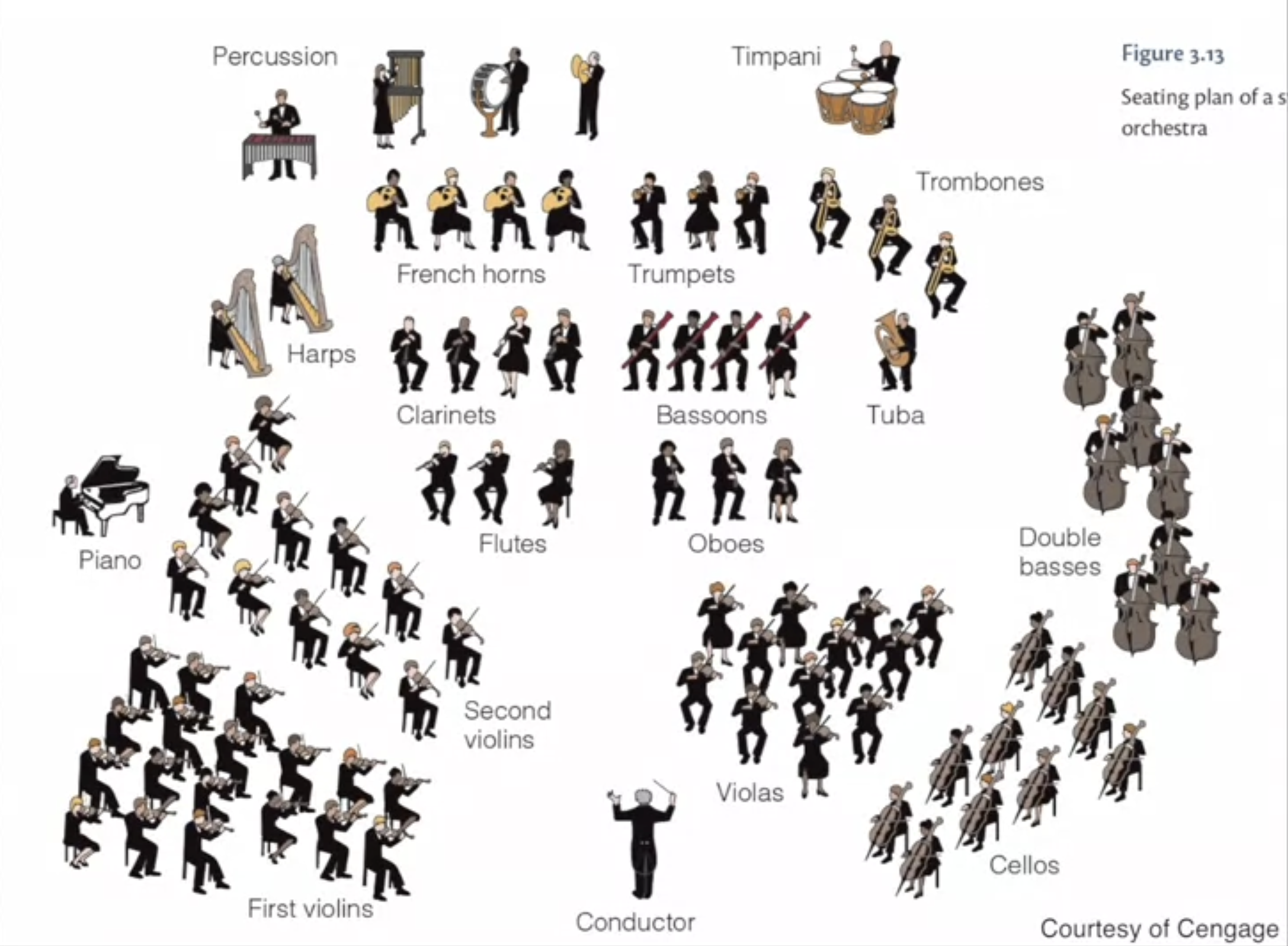
- Strings
- violin, viola, cello, double bass
- vibrato, pizzicato, tremolo technique
- Woodwinds
- Bassoon, clarinet, saxophone, English horn, lower oboe, oboe, flute
- Single reed vs double reed
- Brasses
- Trumpet, French horn, trombone
- The longer the piece of tube, the lower the sound
- Mouthpiece + tube
- Percussions
- timpani/kettle drums, cymbal, snare drum
- Percussions give definitions to the music
- Counterpoint = two or more musical lines go agains each other
Texture, Form, and Style
- Textures
- Monophonic
- Homophonic
- Polyphonic
- Form is created by:
- Statement
- Repetition
- Contrast
- Variation
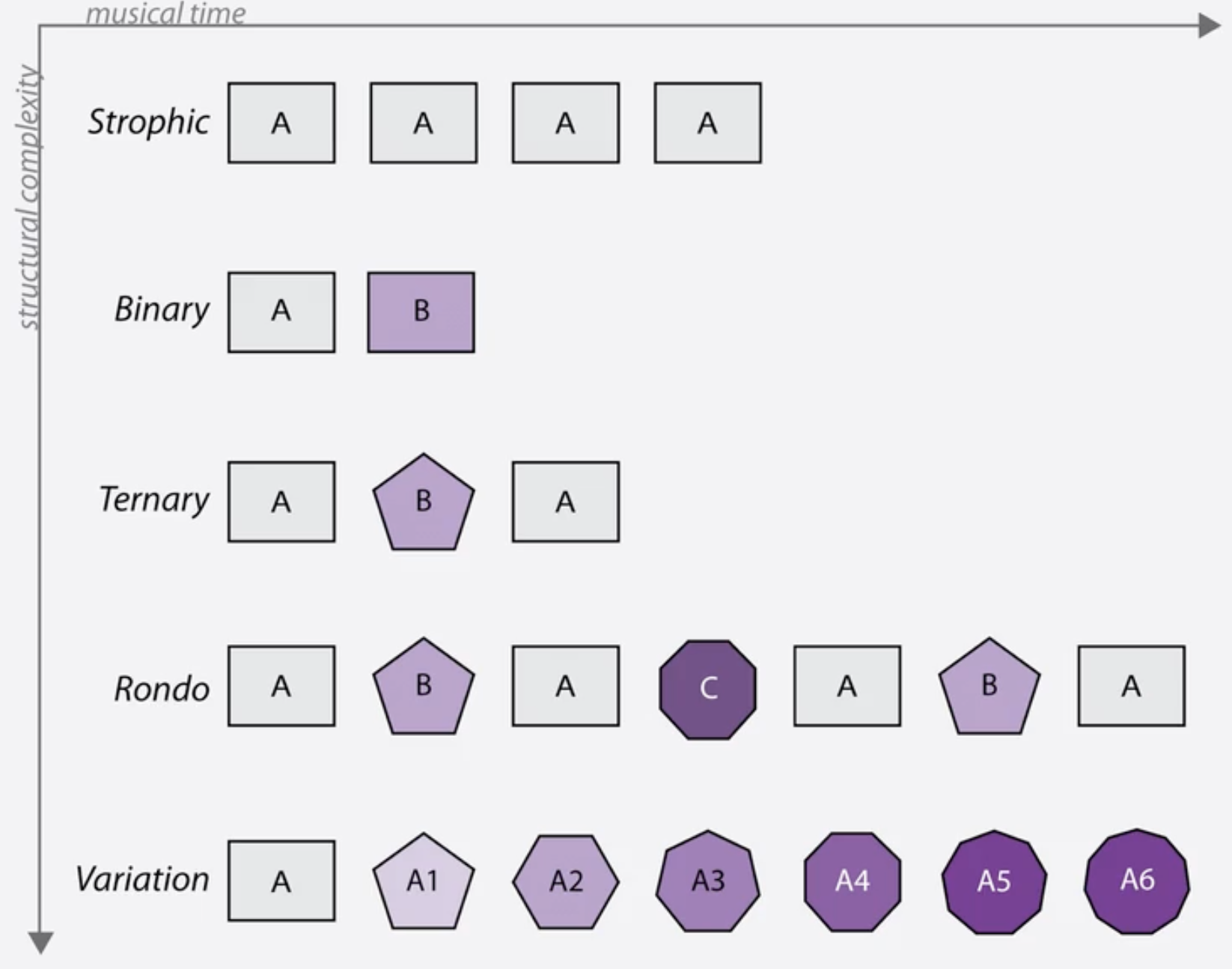
- Five basic common patterns of musical form
- Strophic
- Many strophes/stanza, same music
- Verse + Chorus structure
- Coda = end
- Binary
- Ternary
- Presentation → Diversion → Representation
- Statement → Digression → Restatement
- Rondo
- Variation
- Relative major/minor pitches/keys/scales are separated by 3 half-steps.
- Eight Style Periods
- Middle Age: 476 - 1450
- Renaissance: 1450 - 1600
- Baroque: 1600 - 1750
- Classical: 1750 - 1820
- Romantic: 1820 - 1900
- Impressionist: 1880 - 1920
- Modern: 1900 - 1985
- Postmodern: 1945 - present