Camera Control
Exposure
Under Exposure and Over Exposure
- Exposure = Aperture + Shutter + ISO
- Histogram = a graphic representation of distribution of overall tone value
- Use your light meter to determine
- Incident Light Meter
- Reflected Light Meter - more common
Reflected Light Meter & Meter Modes
- Treat the middle light it measures as middle gray, i.e. assumes it reflect 18%
of the light
- Meters work best when the scene is evenly lit
- Metering Modes
- Evaluative/Matrix/Multi - measure multiple regions and figure out the best
result
- Center Weighted - measures the middle area, used in portraits
- Spot, Partial - usually used in extreme high contrast
Equivalent Exposure Combinations & MAPS
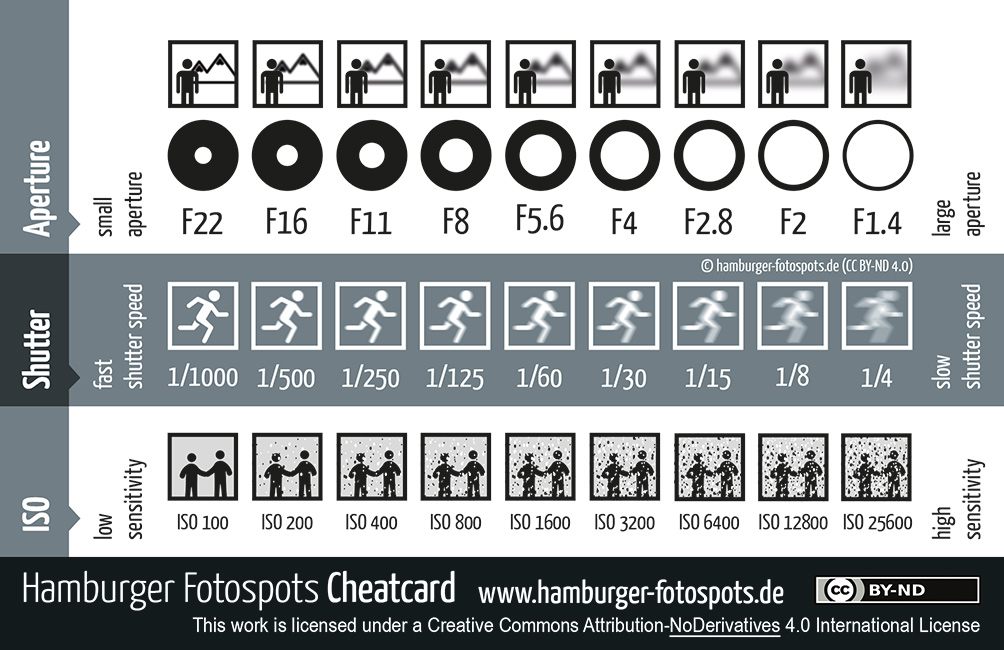
- Manual Mode - sets shutter speed and aperture manually
- Aperture Priority Mode
- Chooses the aperture first, others are calculated
- To ensure the deep/shallow depth of field
- Program Mode
- Automatically adjusts shutter speed and aperture
- Best when you have to make decisions quickly
- Shutter Priority Mode
- Chooses the shutter speed first, others are calculated
- Best when movement is involved
Stop Action and Blur
- Choosing a fast enough shutter speed
- The direction of the movement. If it’s directly moving towards you or away
from you, slower shutter speed is acceptable
- The distance of the subject, closer = higher shutter speed
- The focal length, telephoto lens = higher shutter speed
- Shutter Lag and Focus Lag
The Lens
Focal Length Basics
- Pupil focal length = 17mm in average
- “Normal” depends on sensor size
- Full Frame 36mm x 24mm → 50mm
- APS-C 17mm x 23mm → 30mm
- Four Thirds 21mm x 17mm → 25mm
- Diagonal of the film/sensor is the normal focal length!
- “Normal” is about perspective, not about the field of view
- Perspective is not only a function of objects, but also of the position of the
camera.
Focal Lens Effects
Focal Lens Specialties
Lens Accessories