Camera Capabilities: Differences and Similarities
Basic Vocabulary
- The range of Shutter Speeds available.
- The range of Apertures available.
- The Modes of Exposure available.
- ISO (International Standard Organization) range, the sensitivity range of the sensor.
- Image types. JPEG vs. RAW file.
- Sensor Size and Sensor Type.
- Metering Types. How the exposure level is measured.
- White Balance. How the color is adjusted based on the light source.
- Optical Zoom and Digital Zoom.
- Video and Sound.
- Download options.
- Custom Settings.
- Accessories.
- Handling.
- Flash. The farther away the flash is from the lens, the less likely red eyes will occur.
- Colors of the camera.
- Screen options.
Point and Shoot and Compact Cameras
- Easy of use.
- Others won’t consider you as a professional photographer.
- Examples
- Vivitar Vivicam
- Nikon Coolpix S7000
- Canon Powershot G1X
DSLR Cameras
DSLR = Digital Single Lens Reflex
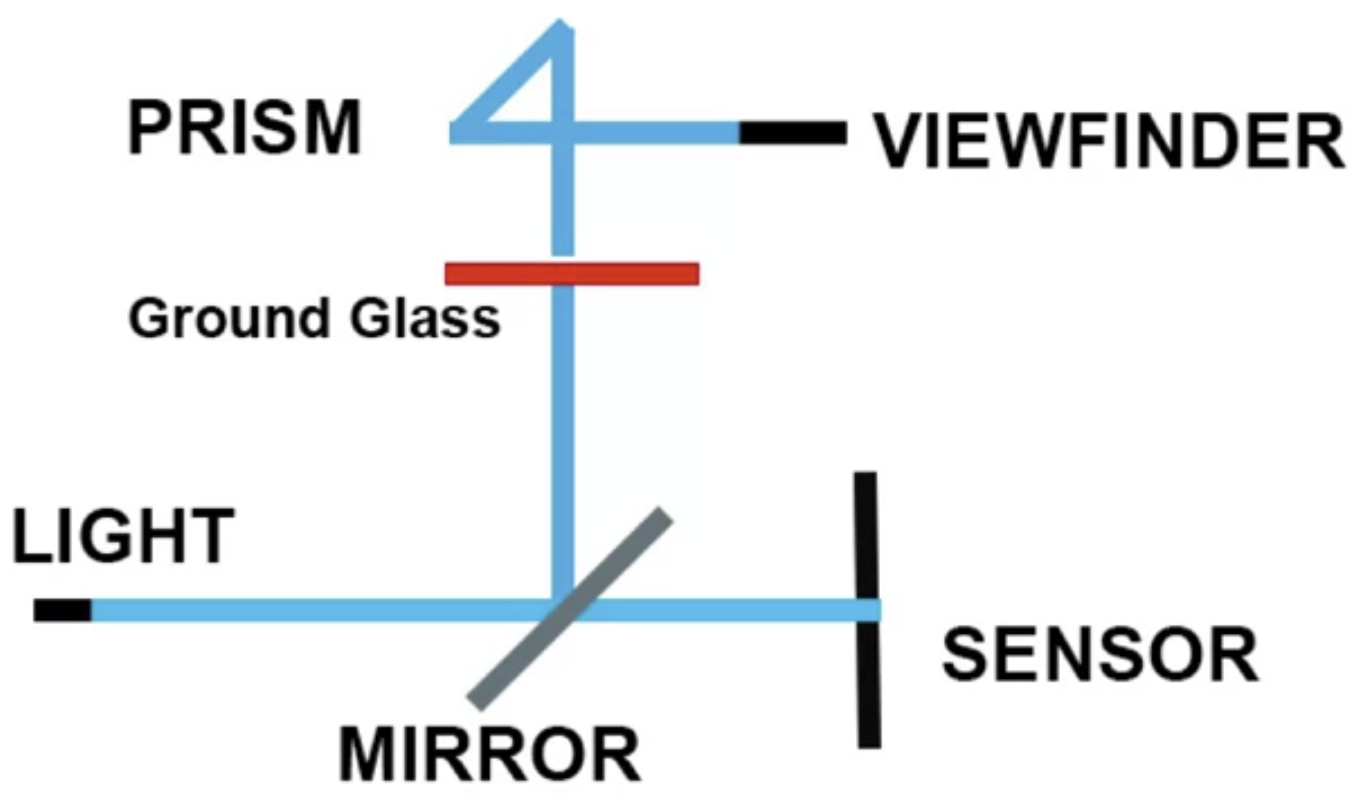
- First DSLR - 1987
- Firs DSLR public available - 1991, Kodak 1991
- When buying DSLR, you are buying for the long haul. Ecosystem matters.
- Additional features
- Tethered shooting.
- Processor speed.
- Sound options
- Examples
- Pentax K-50
- Canon EOS Rebel T6s
- Nikon 810
Mirrorless Cameras
- Light-weight, compact.
- Interchangeable lenses.
- Usually a four-third sensor.
- Try before you buy.
- Examples
- Nikon 1 S2
- Olympus Pen E-PL7
- Fujifilm X-T10
Program Mode and the Effect of ISO
- MAPS
- Manual
- Aperture Priority
- Program Mode
- Shutter Priority
- In Program Mode, only aperture and shutter speed are determined by the camera.
- “Anti-shake mode” when low ISO is used.
- “Shallow focus mode” when higher ISO is used and in higher light conditions to achieve higher depth of field.
- Program Mode favors at first fast shutter speed. The preference between blurriness and sharpness can be tuned.
- Higher ISO in Program mode
- faster shutter speed
- a little bit narrower aperture
- greater focus distance
- Lower ISO in Program mode
- fast shutter speed
- wider aperture
- shallower focus area/depth of field
- blur from camera/object movement
Working a Scene
Don't look down
Try not to constantly look at the pictures you are taking.